Delving into Smart financial strategies for debt reduction, this introduction immerses readers in a unique and compelling narrative, with personal blog style that is both engaging and thought-provoking from the very first sentence.
Are you drowning in debt and looking for a way out? Look no further! This guide will provide you with practical tips and strategies to help you reduce your debt and achieve financial freedom. From budgeting to negotiating with creditors, we’ve got you covered.
Let’s dive in!
Smart Financial Strategies for Debt Reduction
When it comes to reducing debt, it’s essential to have a solid plan in place. By implementing smart financial strategies, you can work towards becoming debt-free and improving your financial well-being.
Effective Methods to Reduce Debt
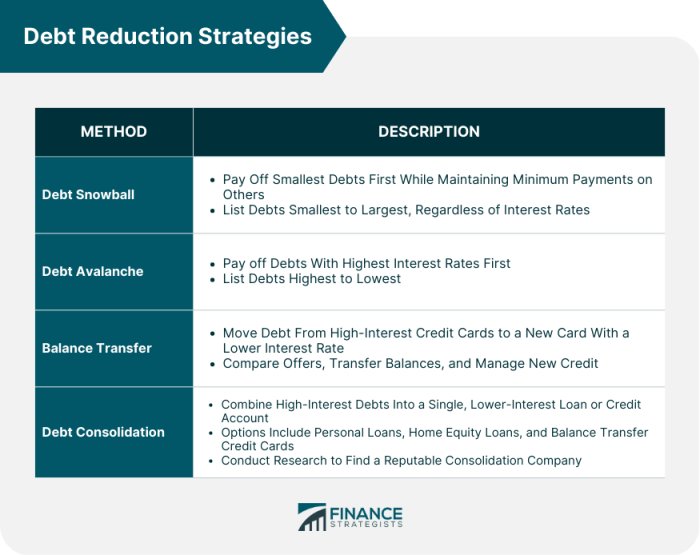
One effective method to reduce debt is the snowball method, where you focus on paying off your smallest debts first while making minimum payments on larger debts. This can create a sense of accomplishment and motivation to continue tackling your debts.
Another method is the avalanche method, where you prioritize paying off debts with the highest interest rates first. By doing this, you can save money in the long run by reducing the amount of interest you pay.
The Importance of Budgeting in Debt Reduction
Creating a budget is crucial when working towards debt reduction. By tracking your income and expenses, you can identify areas where you can cut back and allocate more funds towards paying off debts. A budget helps you stay on track and make informed financial decisions.
The Role of Debt Consolidation in Managing Debt
Debt consolidation involves combining multiple debts into a single loan with a lower interest rate. This can make managing debt more manageable by simplifying payments and potentially reducing overall interest costs. However, it’s essential to carefully consider the terms and fees associated with debt consolidation before proceeding.
Tips on Negotiating with Creditors for Lower Interest Rates
When negotiating with creditors for lower interest rates, be prepared to explain your financial situation and demonstrate your commitment to repaying the debt. You can leverage offers from other creditors to negotiate better terms. Remember to stay persistent and polite during the negotiation process.
Financial Freedom
Financial freedom is the ability to live life without the constant stress of financial constraints. It means having enough savings and resources to cover expenses, pursue your goals, and enjoy life without being burdened by debt or financial worries.Smart financial strategies play a crucial role in achieving financial freedom by helping individuals manage their money effectively, reduce debt, increase savings, and invest wisely.
By creating a budget, paying off high-interest debts, saving consistently, and making smart investments, individuals can gradually build wealth and secure their financial future.
Examples of Achieving Financial Freedom
- Dave Ramsey: A popular financial guru who is known for his debt snowball method, helping thousands of people become debt-free and achieve financial independence.
- Mr. Money Mustache: A blogger who retired at 30 by adopting a frugal lifestyle, saving aggressively, and investing wisely to achieve financial freedom.
- Elizabeth Willard Thames: Author of “Meet the Frugalwoods” who achieved financial independence by saving more than 70% of her income and living a minimalist lifestyle.
Long-Term Benefits of Attaining Financial Freedom, Smart financial strategies for debt reduction
- Peace of Mind: Being debt-free and financially secure allows individuals to enjoy peace of mind without constantly worrying about money.
- Flexibility: Financial freedom provides the flexibility to make choices based on personal preferences rather than financial constraints.
- Generational Wealth: By building wealth and securing financial freedom, individuals can leave a legacy for future generations.
Money Mentors
Finding the right guidance when it comes to managing your finances can be a game-changer. Money mentors play a crucial role in helping individuals navigate their financial journey, offering valuable insights and personalized advice to achieve financial success.
Role of Money Mentors
Money mentors act as experienced guides who provide support, knowledge, and motivation to individuals seeking to improve their financial well-being. They offer personalized advice tailored to each individual’s unique financial situation, helping them set achievable goals and develop effective strategies to reach them.
- Money mentors help individuals create realistic budgets and prioritize their financial goals.
- They provide accountability and encouragement to stay on track with financial plans.
- Money mentors offer expertise in various financial areas, such as investing, saving, and debt management.
Finding a Reliable Money Mentor
When looking for a money mentor, it’s essential to find someone with a strong financial background, relevant experience, and a track record of helping others succeed financially. Here are some tips for finding a reliable money mentor:
- Seek recommendations from trusted sources, such as friends, family, or financial professionals.
- Look for a mentor who aligns with your financial goals and values.
- Consider working with a certified financial planner or advisor who has the expertise to provide comprehensive financial guidance.
How Money Mentors Help with Debt Reduction Strategies
Money mentors can be instrumental in helping individuals develop effective debt reduction strategies. By providing personalized advice and support, they can assist in creating a plan to tackle debt efficiently and work towards financial freedom.
Money mentors can help individuals negotiate with creditors, prioritize high-interest debts, and explore debt consolidation options to streamline repayment.
Successful Money Mentorship Stories
There are numerous success stories of individuals who have benefited from the guidance of money mentors. One example is a young professional who was able to pay off substantial student loan debt in a few years with the help of a financial mentor.
By following a structured repayment plan and implementing smart financial habits, the individual achieved financial freedom sooner than expected.
Prosperity Path
Creating a prosperity path in financial planning can provide a roadmap to achieving financial goals and ultimately reducing debt. By following a structured plan tailored to individual circumstances, individuals can take control of their finances and work towards a debt-free future.
Steps to Create a Personalized Prosperity Path
- Evaluate Current Financial Situation: Begin by assessing your current income, expenses, debts, and savings to get a clear picture of where you stand financially.
- Set Specific Financial Goals: Define clear and achievable financial goals such as paying off debt, saving for emergencies, or investing for the future.
- Create a Budget: Develop a detailed budget that Artikels your income and expenses, allowing you to track where your money is going and identify areas where you can cut back.
- Establish an Emergency Fund: Save a portion of your income regularly to build an emergency fund that can cover unexpected expenses without relying on credit.
- Pay Off High-Interest Debt First: Prioritize paying off high-interest debt to reduce the amount of interest paid over time and accelerate your debt repayment.
- Monitor Progress and Adjust: Regularly review your finances, track your progress towards your goals, and make adjustments as needed to stay on track.
Examples of Individuals Who Have Followed a Prosperity Path
- John and Sarah: By creating a budget, setting specific financial goals, and diligently saving a portion of their income, John and Sarah were able to pay off their credit card debt within two years and start saving for a down payment on a house.
- Lisa: After evaluating her financial situation and creating a personalized prosperity path, Lisa focused on paying off her student loans and car loan first, followed by building an emergency fund and investing for retirement, ultimately achieving financial stability and peace of mind.
Capital Craft
Capital craft is a concept in financial management that focuses on effectively utilizing available resources to generate wealth and achieve financial goals. This involves strategic planning, smart decision-making, and prudent allocation of funds to maximize returns and minimize risks.
Applying Capital Craft for Debt Reduction
Applying capital craft strategies can be a game-changer when it comes to reducing debt. By leveraging your assets and investments wisely, you can accelerate debt repayment and improve your overall financial health. Here are some ways to apply capital craft for debt reduction:
- Utilize low-interest balance transfer offers to consolidate high-interest debts and lower overall interest payments.
- Allocate windfalls, such as tax refunds or bonuses, towards paying off debt rather than spending them frivolously.
- Consider refinancing high-interest loans or mortgages to secure lower interest rates and reduce monthly payments.
Improving Capital Craft Skills
Improving your capital craft skills is essential for achieving better financial outcomes. Here are some tips to enhance your capital craft skills:
- Educate yourself on investment strategies and financial markets to make informed decisions about where to allocate your funds.
- Create a budget and stick to it to ensure you are living within your means and not accumulating unnecessary debt.
- Diversify your investment portfolio to spread risk and maximize returns over the long term.
Financial Institution
Financial institutions play a crucial role in debt management by offering a range of services to help individuals reduce and manage their debt effectively. These institutions provide various resources and tools that can be leveraged to create a solid financial plan for debt reduction.
Services Offered by Financial Institutions
- Debt consolidation loans: Financial institutions offer loans that can be used to consolidate multiple debts into a single, more manageable payment.
- Financial counseling: Many institutions provide financial counseling services to help individuals create a budget and develop a plan to pay off debt.
- Debt management programs: Some institutions offer debt management programs that negotiate with creditors on behalf of individuals to lower interest rates and monthly payments.
Leveraging Financial Institution Resources
It is essential to take advantage of the resources offered by financial institutions to create a personalized debt reduction plan. This may include seeking professional advice, using online tools, and exploring different debt management options.
Choosing the Right Financial Institution
- Research and compare: Take the time to research and compare different financial institutions to find one that offers the services and resources that best suit your debt management needs.
- Check reviews: Look for reviews and feedback from other customers to gauge the institution’s reputation and customer service.
- Consider fees and interest rates: Pay attention to any fees associated with services and the interest rates offered by the institution to ensure they are reasonable and competitive.
Business Finance Strategy
When it comes to business finance, having a solid strategy in place is crucial for success. This includes effectively managing debt to ensure the financial health and longevity of the business. By implementing smart financial strategies, businesses can reduce debt and pave the way for future growth and prosperity.
Effective Debt Reduction Strategies for Businesses
- Establish a Budget: Creating a detailed budget that Artikels income and expenses can help businesses identify areas where they can cut costs and allocate funds towards debt repayment.
- Negotiate with Creditors: Businesses can reach out to creditors to negotiate lower interest rates or extended payment terms to make debt more manageable.
- Increase Revenue Streams: Diversifying revenue sources or implementing strategies to boost sales can increase cash flow, making it easier to pay off debts.
- Prioritize Debt Repayment: Focus on paying off high-interest debts first to reduce overall interest costs and free up cash for other business needs.
Successful Businesses with Smart Financial Strategies
- Apple Inc.: Apple strategically manages its debt by issuing bonds at low-interest rates to fund operations and expansion, allowing the company to grow without being burdened by high debt payments.
- Amazon.com: Amazon has used its cash reserves to pay off debt early, reducing interest expenses and improving its financial health.
Tips for Entrepreneurs
- Seek Professional Advice: Consult with financial advisors or accountants to develop a customized finance strategy tailored to your business needs.
- Monitor Cash Flow: Regularly track cash flow to identify potential issues early and make adjustments to stay on top of debt repayment.
- Stay Disciplined: Stick to your finance strategy and avoid taking on unnecessary debt to ensure long-term financial stability.
Focus Finance
When it comes to debt reduction, focus finance plays a crucial role in helping individuals stay on track and achieve their financial goals. By concentrating on specific financial strategies and consistently working towards reducing debt, individuals can make significant progress towards financial freedom.
Importance of Financial Focus in Debt Reduction
Having a clear focus on financial goals is essential for successful debt reduction. It helps individuals prioritize their spending, stay motivated, and track their progress towards becoming debt-free. By concentrating on their financial objectives, individuals can make informed decisions and take actions that align with their long-term financial well-being.
Strategies for Maintaining Financial Focus
- Set specific and achievable financial goals to guide your debt reduction journey.
- Create a budget and track your expenses to ensure you are staying within your financial limits.
- Avoid unnecessary expenses and focus on paying off high-interest debts first to save money in the long run.
- Regularly review your financial progress and make adjustments as needed to stay on track.
Tips for Staying Motivated and Committed
- Visualize the end goal of financial freedom and remind yourself of the benefits of being debt-free.
- Celebrate small victories along the way to keep yourself motivated and encouraged.
- Find a support system or accountability partner to share your progress and challenges with.
- Acknowledge your achievements and stay focused on the long-term benefits of debt reduction.
Conclusion: Smart Financial Strategies For Debt Reduction
In conclusion, mastering smart financial strategies for debt reduction is the key to unlocking the doors to financial freedom. By implementing these tips and tricks, you can pave the way towards a brighter financial future free from the shackles of debt.
Take control of your finances today and start your journey towards a debt-free life.
Commonly Asked Questions
How important is budgeting in debt reduction?
Budgeting is crucial in debt reduction as it helps you track your expenses, prioritize payments, and identify areas where you can cut back to allocate more funds towards paying off your debts.
What is the role of debt consolidation in managing debt?
Debt consolidation involves combining multiple debts into a single loan with a lower interest rate, making it easier to manage and pay off debt more efficiently.
How can money mentors help with debt reduction strategies?
Money mentors provide guidance and support in creating personalized debt reduction plans, offering valuable insights and advice on how to effectively tackle debt.
What are some effective capital craft techniques for debt reduction?
Effective capital craft techniques include investing in income-generating assets, diversifying your portfolio, and minimizing unnecessary expenses to free up more funds for debt repayment.


